

Against the backdrop of growing health awareness, dietary fiber has become a key innovation direction in the food industry. As two mainstream soluble dietary fibers, resistant dextrin and polydextrose share similar functions but differ significantly in molecular structure, mechanism of action, and application scenarios, offering diverse options for food formulation design.
Molecular Structure and Functional Characteristics
Resistant dextrin, derived from corn starch, forms a unique digestion-resistant structure through pyrolysis technology, offering excellent heat and acid resistance. It reaches the intestines intact, where it is utilized by probiotics, helping to improve gut microbiota balance and insulin sensitivity.
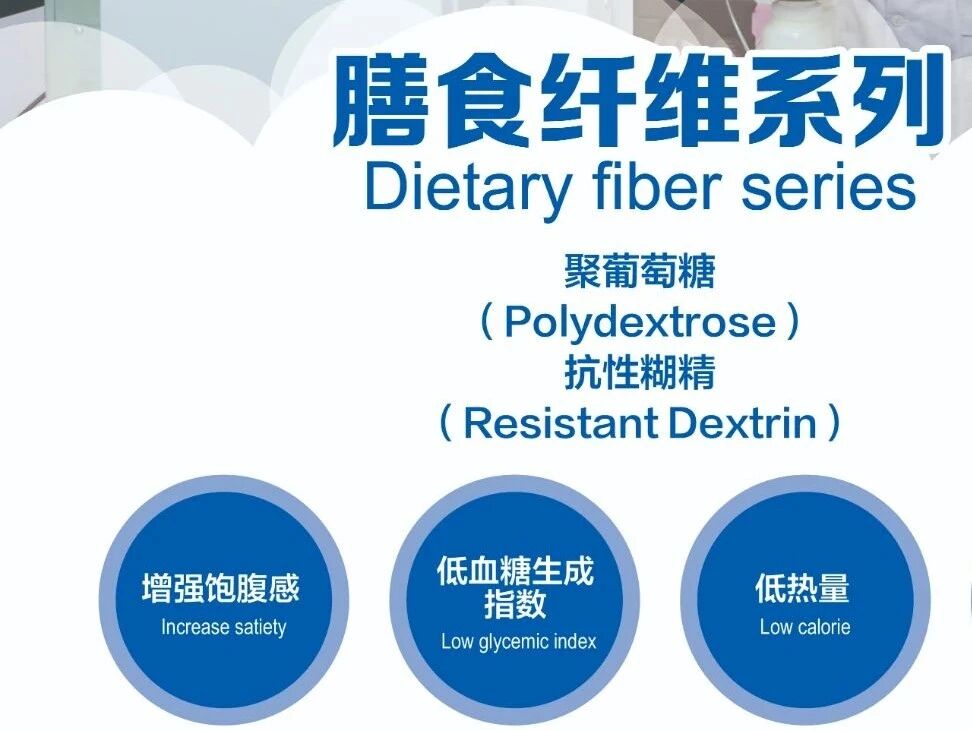
Polydextrose, on the other hand, is synthesized from glucose, sorbitol, and citric acid. Its molecular structure excels at adsorbing cholesterol and delaying glucose absorption, demonstrating outstanding performance in enhancing satiety and blood sugar management.
Polydextrose, on the other hand, is synthesized from glucose, sorbitol, and citric acid. Its molecular structure excels at adsorbing cholesterol and delaying glucose absorption, demonstrating outstanding performance in enhancing satiety and blood sugar management.
Application Scenarios Comparison
Thanks to its stability, resistant dextrin is often used in high-end functional beverages, meal replacement powders, and pharmaceutical carriers that require stringent processing conditions.
Polydextrose is more commonly applied in mass-market health foods such as baked goods, dairy products, and frozen desserts, meeting market demands by improving texture and extending shelf life.
Polydextrose is more commonly applied in mass-market health foods such as baked goods, dairy products, and frozen desserts, meeting market demands by improving texture and extending shelf life.
Selection Recommendations
For target consumers with diabetes or metabolic syndrome, polydextrose is the preferred choice due to its more pronounced blood sugar regulation effects.
For developing high-fiber beverages or solid drinks, resistant dextrin’s heat and acid resistance make it more suitable. If balancing taste and health is the goal, combining the two can create synergistic effects.
For developing high-fiber beverages or solid drinks, resistant dextrin’s heat and acid resistance make it more suitable. If balancing taste and health is the goal, combining the two can create synergistic effects.