

Although dietary fiber is not a mandatory item for food labeling, this low-calorie substance plays a vital role in human health. How should food manufacturers label it in compliance with regulations?
I. What is Dietary Fiber?
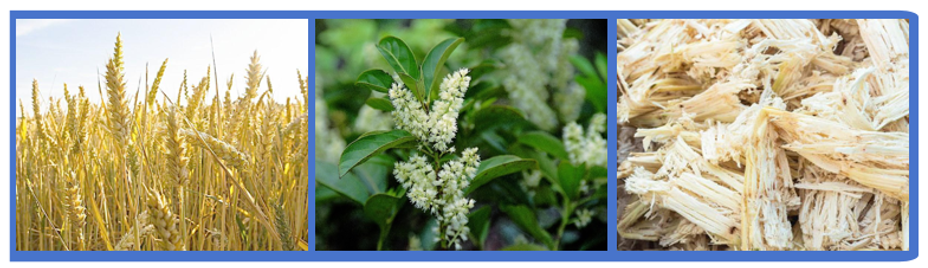
According to Basic Terms of Food Nutritional Components (GB/Z 21922-2008), dietary fiber refers to carbohydrate polymers that are naturally present in plants, or produced via extraction or synthesis.
With a degree of polymerization (DP) of 3 or higher, these polymers cannot be digested and absorbed by the human small intestine, but exert significant health benefits for the human body.
Dietary fiber can be further categorized into soluble dietary fiber and insoluble dietary fiber. In addition to fructooligosaccharides (FOS) and galactooligosaccharides (GOS), ingredients that can
serve as dietary fiber sources also include: resistant dextrin, isomaltooligosaccharides (IMO), polydextrose, xylooligosaccharides (XOS), inulin, polyfructose, and β-glucan (oat-derived), etc.
II. Points to Note for Dietary Fiber Labeling
1. How to Label Dietary Fiber Dietary fiber is not a core nutrient and thus not a mandatory item for food label declaration as required by food standards. If a product inherently contains dietary fiber,
it may be labeled as dietary fiber based on actual test values. Alternatively, the labeling can be specified as soluble dietary fiber or insoluble dietary fiber respectively. For products with additional soluble
dietary fiber added, the content can also be declared in the form of individual dietary fiber components. Examples of such labeling include: Dietary Fiber (as Polyfructose) or Dietary Fiber (as Polyfructose and Inulin).
A key point to note here is: the value listed in the nutrition facts panel shall reflect the content of individual soluble dietary fiber components in the final product, rather than the amount initially added during production.
2. Whether Dietary Fiber Is Included in Energy Calculation The energy conversion factor for dietary fiber is 8 kJ/g, which applies to both the dietary fiber naturally present in the product and individual dietary fiber components
such as indigestible oligosaccharides, resistant starch, and resistant dextrin. When dietary fiber is declared on a product’s nutrition label, the energy provided by dietary fiber shall be included in the total energy calculation.
If the manufacturer opts not to declare dietary fiber, the energy from dietary fiber may be excluded from the calculation.
3. How to Make Nutrient Content Claims for Dietary Fiber Nutrient content claims for dietary fiber shall comply with the requirements of GB 28050. - If the total dietary fiber content (or the content of soluble dietary fiber,
insoluble dietary fiber, or individual components) is ≥ 3 g per 100 g (for solid products) [or ≥ 1.5 g per 100 mL (for liquid products), ≥ 1.5 g per 420 kJ, the label may bear claims such as “Source of Dietary Fiber” or “Contains Dietary Fiber”.
If the total dietary fiber content (or the content of soluble dietary fiber, insoluble dietary fiber, or individual components) is ≥ 6 g per 100 g (for solid products) [or ≥ 3 g per 100 mL (for liquid products), ≥ 3 g per 420 kJ, the label may bear claims such as
“High in Dietary Fiber”, “Rich in Dietary Fiber”, or “Excellent Source of Dietary Fiber”.
4. How to Make Function Claims for Dietary Fiber Dietary fiber is eligible for function claims when it meets either the requirements for nutrient content claims or comparative claims. Permissible function claims for dietary fiber include: > “Dietary fiber helps maintain normal intestinal function” > “Dietary fiber is a low-energy substance”. The font size of these function claims shall not be larger than that of the product name and trademark.
5. Whether Quantitative Labeling of Dietary Fiber Is Permissible If soluble dietary fiber ingredients are added to the product, the label may claim that dietary fiber has been added. In such cases, the manufacturer is required to: 1. Indicate the amount of added dietary fiber in the ingredient list; 2. Declare the total dietary fiber content in the nutrition facts panel.
