

Allulose, alos called "D-Allulose", is increasingly used in yogurt as a low-calorie, natural sweetener that closely mimics the sensory profile of sucrose without the bitter aftertaste typical of other sugar alternatives.
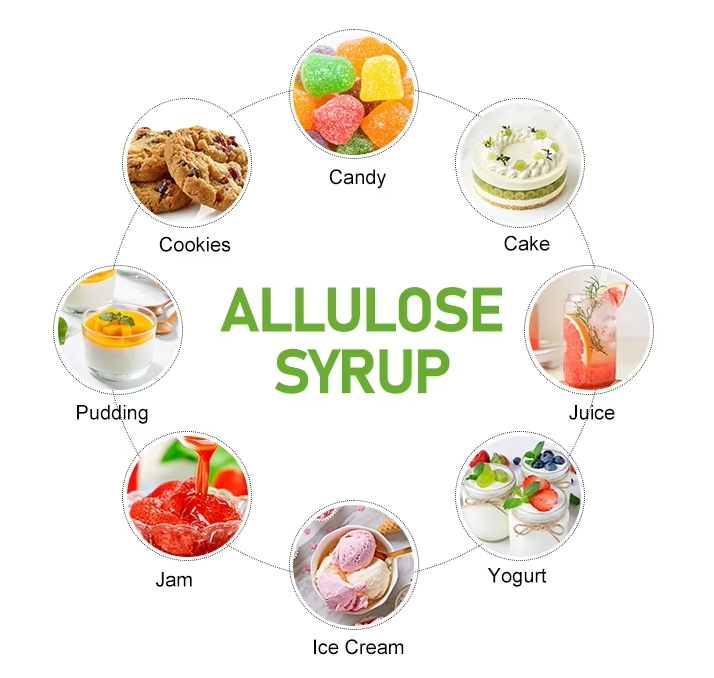
Sensory and Functional Applications
- Sweetness and Flavor: Allulose provides approximately 70% of the sweetness of table sugar. In consumer tests, allulose-sweetened yogurt performed similarly to sucrose-sweetened versions in overall liking and flavor, significantly outperforming stevia, which often carries bitter or metallic off-notes.
- Texture and Mouthfeel: Unlike high-potency sweeteners (like sucralose or stevia) that lack bulk, allulose acts as a bulking agent, contributing a creamy mouthfeel and body similar to traditional sugar. In drinkable soymilk yogurt, it has been shown to increase thickness and mellow out sourness.
- Syneresis Control: Using allulose in yogurt formulations can help prevent syneresis (liquid separation), maintaining product consistency and water-holding capacity.
- Synergistic Blends: Manufacturers often blend allulose with high-intensity sweeteners to reach desired sweetness levels. A common mix is 70% allulose and 30% stevia, which provides a profile most similar to traditional sugar.
Impact on Fermentation and Probiotics
- Acid Production Regulation: Studies show that allulose can suppress acid production in certain yogurt starter cultures (e.g., L. bulgaricus) without altering the growth efficiency or probiotic activity. This may be useful for regulating over-fermentation in products that would otherwise become too sour.
- Microbial Growth: Allulose is generally not metabolized by common lactic acid bacteria, meaning its beneficial health effects (like being nearly calorie-free) remain intact after the fermentation process.
Regulatory and Labeling Advantages (2025 Status)
- Sugar Labeling: In the U.S., the FDA allows allulose to be excluded from "Total Sugars" and "Added Sugars" on Nutrition Facts labels because it is not metabolized like regular sugar. Commercial brands like Chobani Zero Sugar utilize this for their zero-sugar claims.
- Consumer Perception: Informing consumers that yogurt is sweetened with allulose (often labeled as an "upcycled" or "natural" rare sugar) has been shown to significantly increase purchase intent.
- Safety: While approved in the U.S. (GRAS), Mexico, and several other countries, allulose is still undergoing assessment as a novel food in the European Union as of 2025.